Sell My Mobile Home Fast High Springs FL, On Land Or In A Park
★★★★★ 4.9 from 64 Google reviews · Licensed Florida Mobile Home Broker

Brenton Basinger
Licensed Florida Mobile Home Broker
License BH 1149137-1. When you call, you get me or Marie, not a call center.
Do you want to sell your mobile home in High Springs? You have two ways to do it.
We can buy it for cash. You pick the closing day. No repairs. No showings.
Or we can list it for you. Most owners get more money that way. You pay $2,500 when it sells. Nothing up front. Nothing if it does not sell.
The listing runs 30 days, not six months. About 8 out of 10 of our homes sell in that time.
We do both. So we will show you both numbers first. Then you pick.
Find out what your home is worth. Tell us about the property, and we will call you back with a number, usually the same day. That call starts the process.
Do you want a cash offer, or the bigger number?
The state’s licensed park list has no entry in High Springs. Alachua County carries twelve licensed parks and 2,347 lots between them, eleven of those in Gainesville. Your property is almost certainly on private ground, and that fact reorganizes selling it.
Ask and a cash offer on your mobile home follows. We buy mobile homes ourselves when the arithmetic works, and the cash offer arrives with no repair list and no inspection period. We buy the property as it stands, so nothing gets cleaned or fixed first. We will not dress that cash figure up as what a listing brings: cash carries the risk we take on the property afterward, so the offer sits below retail.
Our process for the offer is short: the year, the size, the condition, how a truck reaches the property, and what the land underneath is doing. The cash offer comes in writing with its reasoning, under no obligation, good in an hour or a week. Say the cash number falls short and we rerun it. The offer is ours, not a lead sold on.
What A Mobile Home Is Worth In High Springs
No licensed rental community inside High Springs at all. Every manufactured home here sits on ground somebody owns, which makes this a land-and-home market with no park sales in it, and a valuation built from Gainesville park comparables would describe the wrong transaction entirely.
Selling A Home On Your Own Acreage
If the land conveys, the property transfers together and closes like ordinary real estate, with the parcel carrying much of the value. If you are keeping the ground, a buyer moves the home, and Florida issues no relocation permit for anything built before June 15, 1976.
Ready To Sell In High Springs FL, And What Fast Actually Means
Ready means three things. The title is in hand, or you know it needs reinstating and have started. The build date is confirmed if the home might be moved. And the price you expect for your home is honest, because a small market punishes a wrong number by going quiet. No licensed community in town means the tax collector, not a park office, sets the pace of every sale.
Selling A Home Fast Without Giving It Away
A home fast sale and a full price sale are usually only a few weeks apart here. The cash buyer closes in about a week and pays less; the listing takes a bit longer and usually returns more. We quote both the same day so the choice is arithmetic rather than pressure.
When A Cash Buyer Is The Right Answer
An estate to settle, a move that already happened, a property you no longer want to think about. Those are good reasons to take a cash offer. Not knowing what your home is worth is never one, and the valuation that fixes it is free.
The Closing, And What Selling Costs
A flat $2,500 from proceeds at closing, only if the home sells. Nothing up front, nothing at all if it does not, and it is all handled online, which matters when the owner already lives somewhere else.
Three Ways Owners Sell Homes Around High Springs
Most owners sell one of three ways. They sell to a cash buyer and take a lower number for speed. They sell through a broker and let the market set the price. Or they try to sell privately, which works occasionally and usually costs more in time than it saves in fees. Homes here sell through all three routes every year, and the right one depends on your calendar rather than on anybody’s opinion.
Homes On Land Versus Homes On A Rented Pad
Every home here sits on its own ground. Homes on owned land sell as property, with the title work at the tax collector doing the heavy lifting. Homes on a rented pad sell with park approval in the middle. Both sell, both have buyers waiting, and neither is harder than the other once somebody who does this daily is handling it.
What Homes In Any Condition Are Worth
Rough homes sell. Tired homes sell. Homes that need a roof sell, at a price that reflects the roof. What does not sell is a home priced as though none of that were true, and the fastest way to find out which you have is to ask for the number before you decide anything.
Ready To Sell Your Home?
Ask for the free valuation. It costs nothing, it arrives in writing, and it is yours whether you sell to us, sell through us, or decide not to sell at all this year.
Order matters. Take the free market analysis first, read the retail number, then set the cash offer against it. Some owners in High Springs take the cash anyway, since acreage out this way draws a thin crowd. Others see the spread and decide the open market earns the wait.
That free analysis has to work without the usual raw material. Eleven of Alachua County’s twelve licensed parks sit inside Gainesville, so the community sales file is no help at all on a High Springs valuation. We build the number from land-and-home closings in the northwest corner of the county, out toward the Columbia County line, and we price the two assets apart before putting them back together.
The acreage gets valued on its own: how many acres, road frontage, what the well and the septic are doing, whether an agricultural classification is holding the tax bill down. The structure gets valued separately on year, width, roof, and whether somebody would live in it or strip it for parts.
Owners are regularly surprised by which half carries the weight. On five acres near the Santa Fe River the ground often outruns the home standing on it, and pricing both as one lump is how a listing ends up thousands above anything a buyer will pay. We name the closings we leaned on and show you the split, so you can argue with the arithmetic instead of the conclusion.
Nobody has to approve your buyer
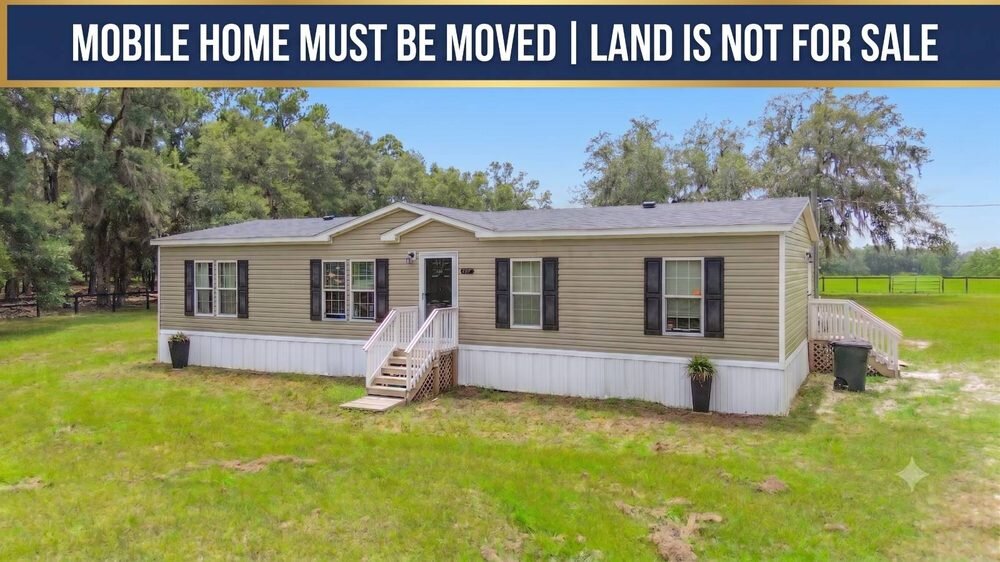
Inside a licensed community the office screens whoever wants to buy, and can reject them a week after terms are agreed. On private ground that step is absent, deleting the slowest piece of the usual selling process.
Logistics replace it: where the home goes, who hauls it, whether the buyer proves both. That becomes the negotiation, so the advertisement leads with it: if the home has to come off the lot, the ground underneath stays where it is. Word it otherwise and two weeks vanish on callers who assumed the acreage came too.
Buyers come from a narrow crowd: somebody holding five acres in northern Alachua County who cannot build, or investors turning a few rehabs a year. Small, motivated, and those buyers nearly always buy with their own cash.
One more thing private ground hands you: no lot rent. An owner inside a Gainesville community pays the office a pad rent every month, and whoever takes over inherits it along with whatever increase gets written next year. Here the running costs are the county tax bill, the insurance and the well pump, and that is a line worth putting in the advertisement.
It widens the field in one direction and narrows it in another. Somebody who would fail a community’s income screen can buy here, because nobody is screening. But chattel lenders write far more readily against a home on a rented pad than against one tied to five acres of north Florida pasture, so a large share of the people who buy out here are paying cash and pricing to match.
Timing runs differently too. This is not a snowbird market with a winter selling window, so interest holds fairly steady through the year. What does move is hauling weather. Summer rain turns an unpaved approach into a reason a transporter pushes the date, which is why a home that has to leave the lot generally does better listed in the dry months.
What decides whether it can legally move
The build date settles it first. The federal HUD code took effect June 15, 1976, and Florida permits no relocation of anything older. When a data plate reads 1976 the exact day matters, so we check it first.
Then the title. Where a mobile home sits on land its owner also holds, the title has often been retired and the county taxes the property as real estate. Reinstating it is routine but slow. The tax collector swapped the annual decal for an RP sticker when land and home were joined, and that has to be unwound before a separate sale of the home can transfer anything. Start it the week you decide to sell, not the week somebody wants to buy.
Then structure. The transport company’s insurance answers that, not us. Cosmetic condition is separate: worn and dated sell fine.
The buyer arranges and pays for the haul. Our part of the process is confirming a real transporter and a real destination exist.
Ready to see the number? Fill this in, we will run the analysis and walk you through it, and a cash offer can sit beside it if you want one. That offer never expires on you, and no buyers get near the property until we screen them.
Before you pay somebody to demolish it
Demolition quotes here come back in the thousands, and that exit starts to feel compulsory.
A sound home still has value even when it needs work, and rehab investors are a real slice of this buyer pool. Nobody shopping retail wants that property, yet cash buyers will buy it. Get the cash offer before signing with a demolition contractor, and weigh the difference between listing and selling for cash against their quote.
The fee, and what the thirty days include
A flat $2,500, owed only when the home sells. Nothing up front, no percentage, no photography or advertising fees, and no fees at all if it does not sell. The agreement runs thirty days, not the half year most brokerages want signed, and roughly 80% of listings go under contract inside it.
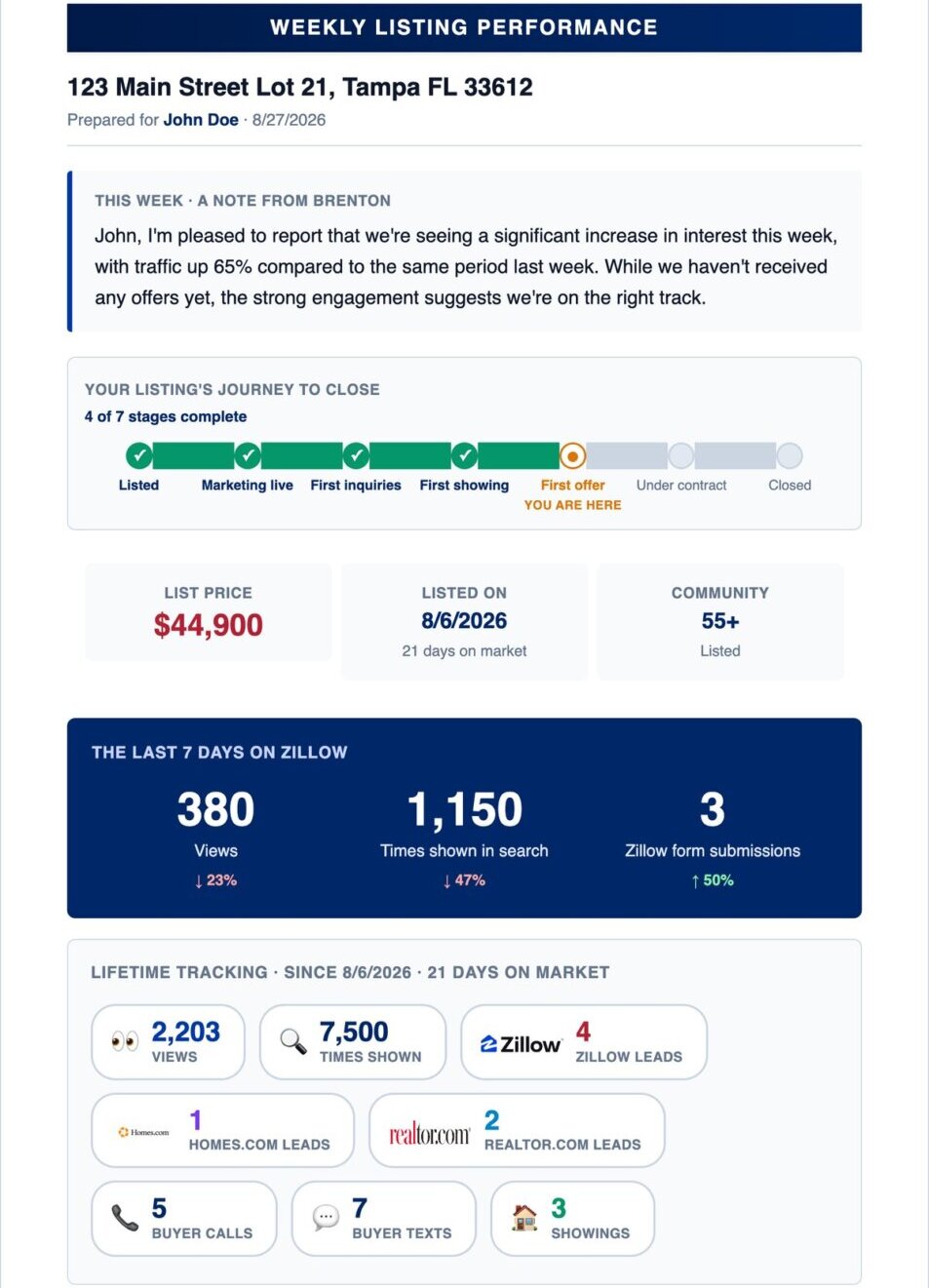
The fee covers drone and ground photography, an English and Spanish listing, twelve syndication platforms, screening buyers before anyone reaches the property, the negotiating, and a weekly written report. Signing and closing run online, which matters where many of these homes belong to owners living out of state. You can read the full process.
Seven stages in all, and every Monday a page names the stage the process reached.
If the home is genuinely finished
Some are. Floor gone, roof open, empty a decade. Even then a buyer frequently exists, because we are also the people buying homes in poor condition nobody else touches. There the cash offer is usually the only live option, and we say that plainly rather than take a listing and burn your month. A cash offer still gets made.
Buying around High Springs rather than selling
Plenty of searching for this town comes from people hunting a home to buy, not selling one. Our active listings on My State MLS span the whole state rather than High Springs alone. Call before you buy one, since permission to relocate is never automatic.
Read our Google reviews to see how this goes for other people. We are a licensed Florida mobile home broker, mobile homes are all we handle, and we also work mobile homes in Gainesville and mobile homes in Hawthorne.
Call (727) 201-0189, 9am to 6pm Monday through Friday.
Start with the free market analysis. No obligation, the numbers are yours either way, and the cash offer stays on the table while you think about it. High Springs sellers get both numbers on the property before selling anything.
Brenton Basinger, President, Florida Mobile Home Solutions, Inc. Licensed Mobile Home Broker, State of Florida, license BH 1149137-1.