Panhandle Mobile Home Services
Quincy, FL
FL Installer License1143475-1Aaron B. Lemieux
Area: Florida and South Georgia
USDOT: 3870150, 2 trucks
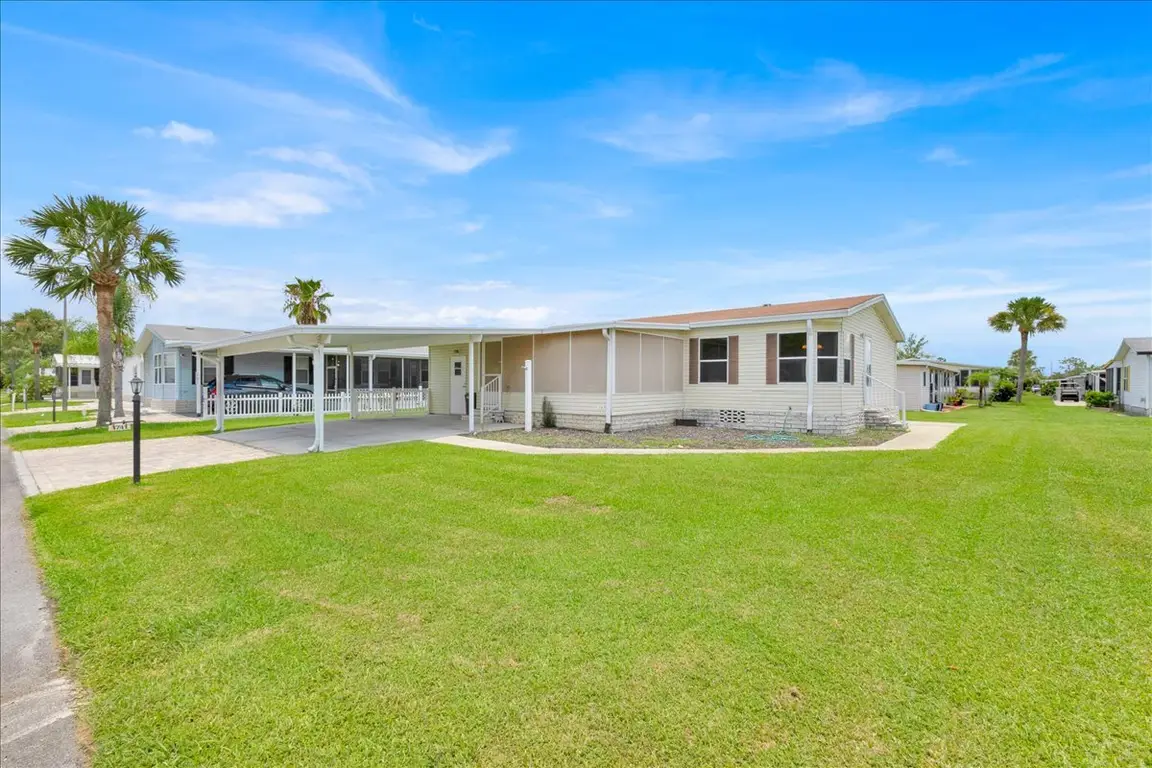
Companies that transport and set up mobile homes across Florida, listed by region, with each one’s state installer license number looked up and shown. Below the list: what a move actually costs for a single-wide and a double-wide, the wind zone rule that stops most moves, and how long the permits really take.
A reference list, not a recommendation. Confirm the license and the insurance yourself before you hire anyone.
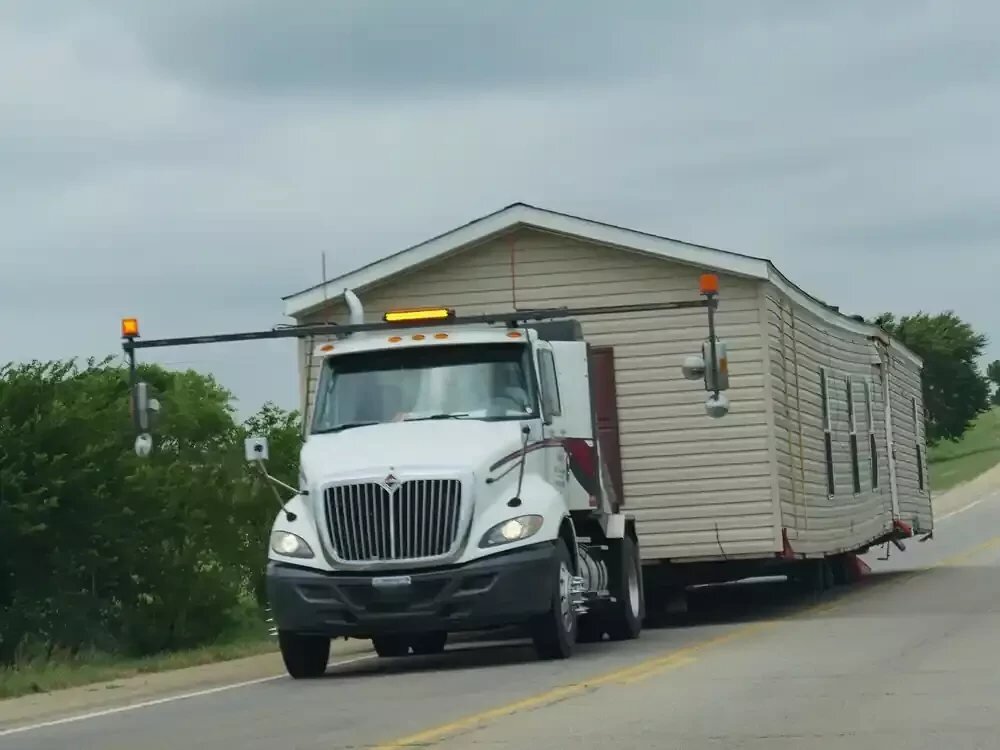
We checked every license number below against the list published by the Florida Department of Highway Safety and Motor Vehicles on 3 September 2026. Service areas are as stated on each company’s own website. Many will travel further for the right job, so ask.
Everything below is what you spend on top of the price of the home. Same move, two different pieces of land. The gap between these two scenarios is usually larger than the price of the home, which makes the land the first thing to look at, not the last.
| Cost | Single-wide | Double-wide |
|---|---|---|
| Transport and setup, under 50 miles | $5,000 to $10,000 | $8,000 to $18,000 |
| Well, drilled and pumped | $3,000 to $12,000 | $3,000 to $12,000 |
| Septic tank and drainfieldSized by bedrooms, so a bigger home can cost more | $5,000 to $20,000 | $5,000 to $20,000 |
| Electric service to the lot | $2,500 to $12,500 | $2,500 to $12,500 |
| Pad, driveway and culvertA double-wide needs a bigger pad, so expect the upper end | $10,000 to $19,000 | $10,000 to $19,000 |
| Permits: setup, septic, and sub-permits | $500 to $3,000 | $500 to $3,000 |
Single-wide on the left, double-wide on the right. Impact fees are not included because they vary too much between counties to estimate. On bare land that has never held a dwelling they can add several thousand dollars or more. Ask your county what applies to your parcel.
| Cost | Single-wide | Double-wide |
|---|---|---|
| Transport and setup, under 50 miles | $5,000 to $10,000 | $8,000 to $18,000 |
| Existing well, inspection and any repair | $0 to $2,000 | $0 to $2,000 |
| Existing septic, inspection | $200 to $600 | $200 to $600 |
| Existing electric service, reconnection | $0 to $1,500 | $0 to $1,500 |
| Pad rework if needed | $0 to $6,500 | $0 to $6,500 |
| Permits, impact fees often waived or credited | $500 to $2,000 | $500 to $2,000 |
Roughly a quarter of the raw land figure at the low end. This is why an existing homesite is worth paying more for than bare acreage, and why a double-wide on a serviced lot can cost less than a single-wide on land with nothing on it.
Almost everyone who calls us about a must-be-moved home is trying to solve the same problem: they want to own the land under their home instead of paying lot rent on it forever.
Lot rent in a decent Florida mobile home park now averages around $1,200 a month. That is $14,400 a year. It has climbed sharply over the last ten years and it keeps climbing, the increases are not yours to control, and at the end of it you own nothing.
Ten years of that is more than $140,000, and that is before a single rent increase is counted.
Now compare it with the numbers further down this page. A single-wide bought for around $20,000 and set on a lot that already has a working well, septic and power comes to roughly $26,000 to $43,000 all in. That is about two to three years of lot rent, paid once, and at the end you own the home and the land under it.
The catch is the land. A cheap home on bare acreage is not a cheap project, and the tables above show why. But a used home on a lot that is already serviced is one of the few genuinely affordable routes to owning property outright in Florida, with no lot rent at all.
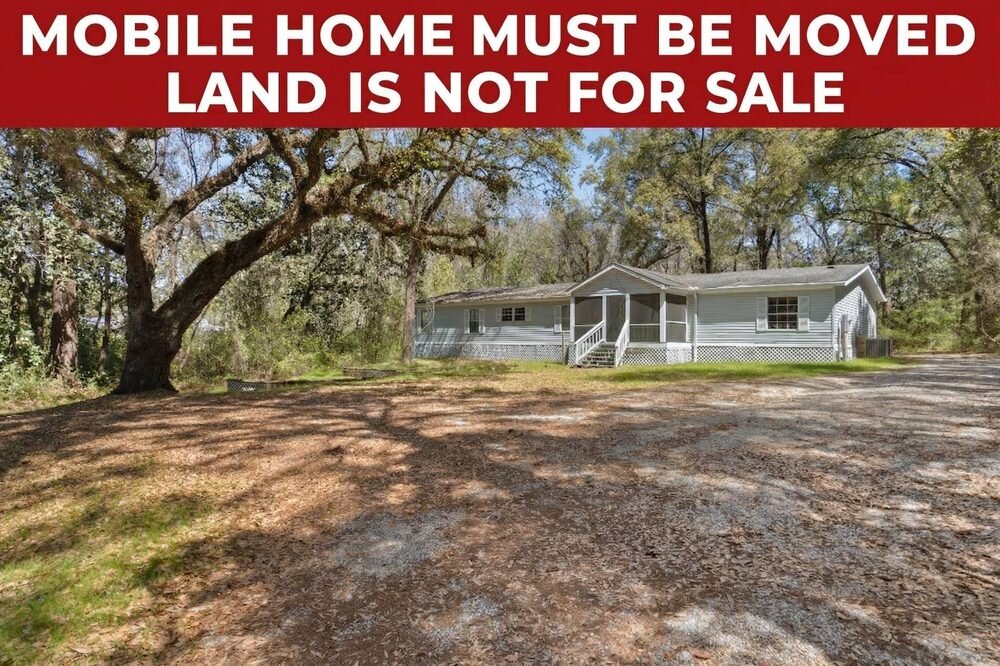
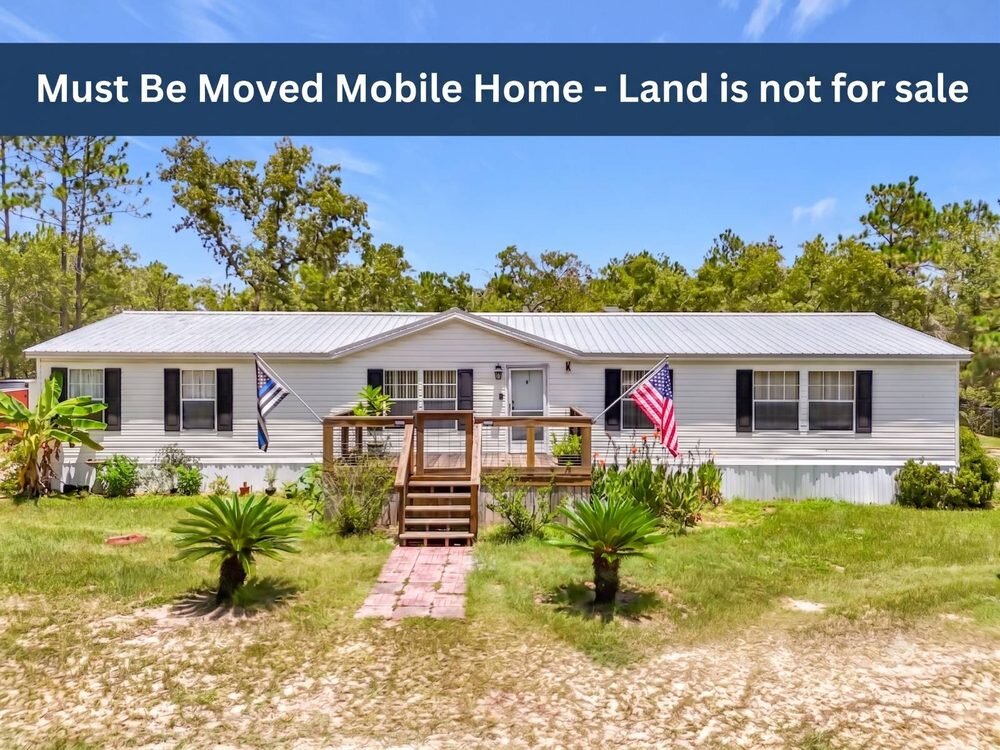
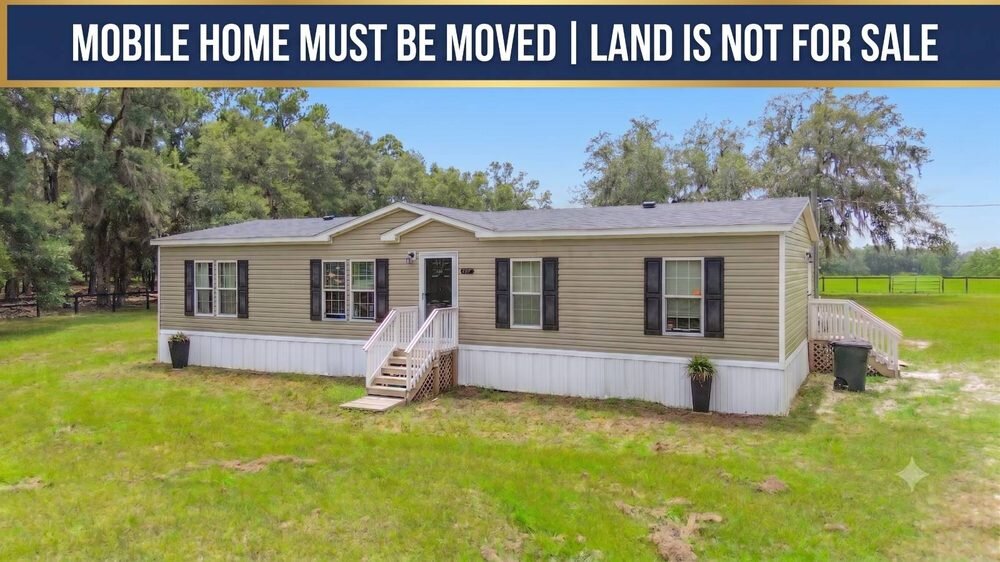
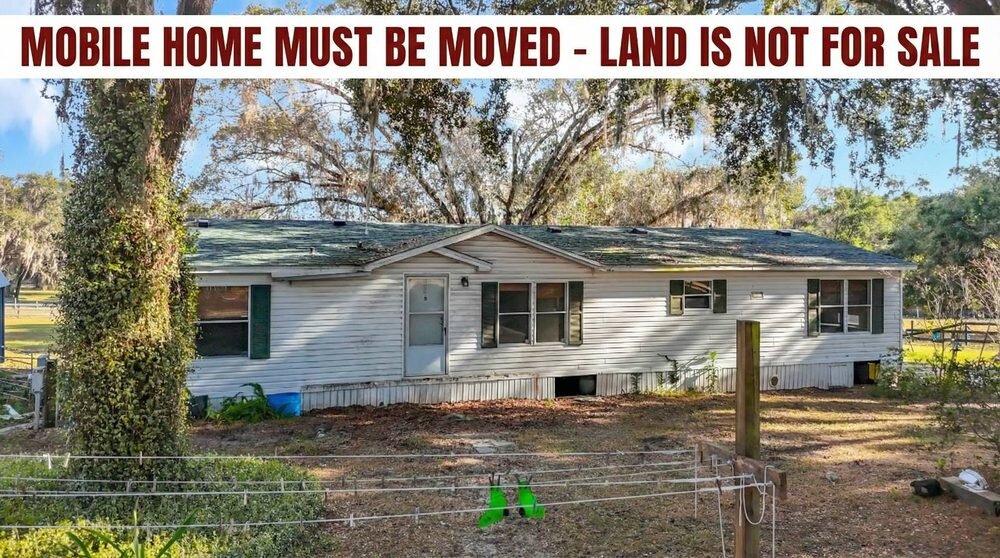
Any one of these can stop a move dead, and all four are answerable before you spend a dollar.
Homes built before that date are pre-HUD and cannot be moved in Florida. Counties will not permit a new set for one except in narrow forced-move situations. Look for the HUD label. No label means assume pre-1976 until proven otherwise.
Not every parcel allows a manufactured home. Many counties and cities have limited zoning designations where one can be placed, and some have none. Call county zoning with the parcel number before you make an offer.
Many Florida counties require a home more than about 20 years old to pass an inspection before they will permit a move. Sumter County sets its threshold at 15 years. Some counties simply will not permit older homes at all.
This one is federal, not local, and it stops more deals than anything else on this list. A home built to Wind Zone II cannot legally be installed in a Wind Zone III county. Check the data plate before you buy.
If you own a home that has to come off the land, whether the lot is being sold, a lease is ending or a park is closing, we buy and broker must-be-moved homes across Florida. Tell us about it and we will tell you what it is worth and what your options are. No cost and no obligation.
The most common reason a cheap mobile home cannot go where the buyer wants to put it.
Roughly two thirds of the state, all of the interior and most of the north. A home built to Zone II can only be placed in a Zone II county.
Fourteen counties, mostly coastal and south. A Zone III home can be installed anywhere in Florida, which makes it worth more if it has to move.
There are no Wind Zone I areas anywhere in Florida. A home built only to Zone I cannot be placed in this state at all.
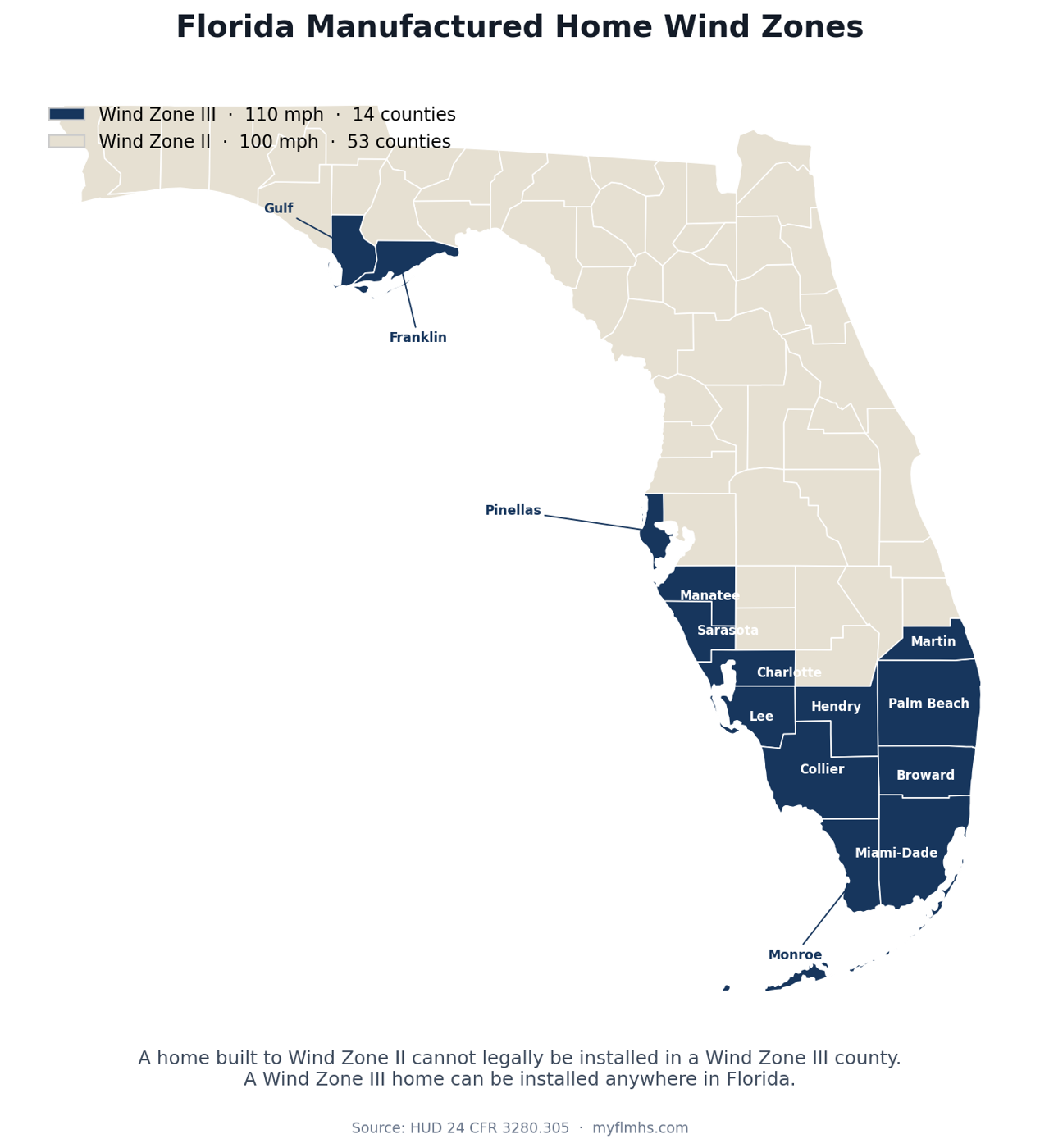
Broward, Charlotte, Collier, Franklin, Gulf, Hendry, Lee, Manatee, Martin, Miami-Dade, Monroe, Palm Beach, Pinellas and Sarasota. Every other Florida county is Wind Zone II.
If the home is going to one of those fourteen counties, it must have been built to Zone III. That is a much smaller pool of homes, and it is why a bargain home in an interior county often cannot follow you to the coast.
If you own a home that has to come off the land and it fails one of the four checks, you still have options. They are just different ones.
| Option | Cost or value | When it makes sense |
|---|---|---|
| Sell it as a must-be-moved home | You get paid | The home passes the four checks and someone else has land for it. Almost always the best outcome for you, because you avoid demolition entirely and walk away with money instead of a bill. |
| Demolition, single-wide | $3,000 to $5,000 | Pre-1976, failed inspection, or too damaged to be worth moving. |
| Demolition, double-wide | $5,000 to $8,000 | Same, but twice the structure to remove and haul. |
| Scrap value | $400 to $1,000 | Steel frame, aluminum siding and copper wiring have value that offsets part of the demolition bill. It does not usually cover it. |
| Demolition permit | $100 to $400 | Your county. Occasionally more. |
| Donation | Sometimes free | Homes built in 1980 or later can sometimes be removed at no cost by a nonprofit, with a tax deduction. Worth a call before you pay for demolition. |
The figures below are what we see quoted in Florida, from brokering must-be-moved homes. They run higher than the national cost guides, which is worth knowing before you budget off one of those.
| Local move, under 50 miles | What we see in Florida | National guides say |
|---|---|---|
| Single-wideBreakdown, transport and setup | $5,000 to $10,000 | $3,000 to $8,000 |
| Double-wideTwo halves, two trips | $8,000 to $18,000 | $7,000 to $13,000 |
| What drives the price | Rate |
|---|---|
| Towing vehicle, per mile | $4.00 to $7.00 |
| Escort vehicle, per mile, eachUsually required on highways | $1.50 to $3.50 |
| Long distance movesBeyond 50 miles, mileage and escorts add up quickly | Add considerably |
This is where budgets break. These are Florida figures where we could find them.
| Item | Cost | Notes |
|---|---|---|
| Water well | $1,500 to $12,000 | Florida average is about $7,000 for a 200 foot well. The Panhandle and North Florida run $3,000 to $8,000. South Florida runs $8,000 to $18,000. Budget another $2,000 to $5,000 if the water needs treatment, which is common. |
| Septic system | $5,000 to $20,000 | A conventional system for a three-bedroom home is realistically $5,000 to $8,000 all in. High water tables, springs protection rules and difficult soil push it much higher. Some counties reach $35,000. |
| Electric service | $2,500 to $12,500 | Roughly $5 to $25 per foot of new line. The utility normally covers the first 100 to 200 feet and bills you for the rest. A meter pole is $500 to $2,200 installed. Each additional utility pole is $1,200 to $5,600. |
| Pad and blocking | $6,500 to $10,000 | The prepared base the home sits on. |
| Driveway | $1,500 to $3,000 | Basic gravel, short run. Paved or long runs cost considerably more. |
| Driveway culvert | $2,000 to $6,000 | Often required where the driveway meets a county road. North Port averages $3,000 to $4,300, Okeechobee $2,400 to $3,500. |
The paperwork side, which almost nobody explains and which will hold up your closing if you miss it.
Permit fees are small. Impact fees are not, and they catch people out.
| County | Rule for replacing a mobile home |
|---|---|
| Brevard | Replacing a residence of similar type, mobile home for mobile home, is exempt from additional residential impact fees. |
| Okeechobee | A credit may apply where a structure replaces an existing dwelling, generally limited to the fee associated with the original structure. |
| Nassau | Replacement exemption available, but you must supply evidence such as aerial photos, property appraiser records or old permits showing an equivalent structure was on the parcel. |
| Pasco | Replacing a mobile home with a larger model does trigger impact fees. The exemption generally covers like-for-like only. |
| Fee | Cost | Who charges it |
|---|---|---|
| Mobile home setup permit | Varies widely | Your county building department. Okaloosa County charges $35 plus a base fee. Every county sets its own. |
| Septic construction permit | $200 to $500 | County health department. Orlando charges $425. Tampa runs $200 to $500. |
| Drainfield permit | $450 to $2,000 | Depends on local rules. |
| State septic fee caps | $25 to $125 | Florida Statute 381.0066 caps application review and permit issuance at $125, site evaluation at $115, plus a $5 research fee. These are agency fees only and do not limit what a contractor charges. |
| Oversize road permit | Pulled by the mover | Florida Department of Transportation. Your transport company handles this and prices it into the quote. |
| Electrical, plumbing, mechanical | Sub-permit fees | Separate permits with their own base fees, on top of the setup permit. |
This catches more buyers than the cost does, and the sequence is the whole answer.
The home, the transport, the setup and the site work are funded up front. Buyers who cannot pay cash outright generally borrow against something else they already own.
Permanently set, blocked, anchored and tied down, with utilities connected and the county inspection passed. This is the step that changes what the home legally is.
With the home permanently installed on land you own and titled as real property, the land and home together can often qualify for conventional mortgages, FHA, and agricultural lending programs.
The RP decal is not just administrative. Converting the home from personal property to real property, by filing the DR-402 with the Property Appraiser and getting the RP decal from the Tax Collector, is what puts the home and the land into a single package a lender can write against. Until that is done the home is titled like a vehicle, and it is financed like one, if at all.
This is why so many must-be-moved purchases are cash deals, and why the ones that are not tend to involve a buyer who borrowed against another property, used a personal or equipment loan, or paid from savings and refinanced afterwards.
Two licenses, two authorities, three stages.
Utilities disconnected, skirting, steps and any additions removed, axles and hitch fitted so the home can travel. Done at the home’s current site.
A toter truck pulls the home on the highway under an oversize permit from the Florida Department of Transportation, usually with escort vehicles.
Blocking, leveling, anchors and tie-downs to Florida Rule 15C-1, then utilities reconnected and a final inspection.
| Stage | How long |
|---|---|
| Permit approvalThe part nobody budgets time for | 8 to 12 weeks |
| Planning, quotes and scheduling | 2 to 4 weeks |
| Breakdown and prep at the old site | 1 to 2 weeks |
| The transport itself | 1 day |
| Setup, leveling, tie-downs and reconnection | 3 to 7 days |
Looking for a must-be-moved home? We are a licensed Florida mobile home brokerage and we list them across the state. See what we have available now. Wondering whether a home can be moved at all, or what yours is worth as a must-be-moved home? Read more about must-be-moved homes, or get a free broker valuation.
We are a licensed Florida mobile home brokerage and this is what we do every day. If you are working through the numbers on a specific home or a specific piece of land and want a second opinion, ask us. We are happy to answer questions from people who are not buying anything from us.